Chromecast can be a notoriously difficult platform to develop for. Over the years, the hardware has evolved significantly; while recent models are powerful, early versions are easily overloaded and struggle with modern web overhead.
At Bedrock, we faced a specific architectural challenge: our Chromecast project was living as a single route within our massive main web repository. While this “monolith” approach worked initially, our rapid growth eventually turned it into a bottleneck.
📉 The Trouble with the Monolith
As the project scaled, we hit a wall with two primary issues:
User Dissatisfaction: Performance wasn’t meeting our standards. One of our major clients has massive Chromecast traffic, and the laggy experience was becoming a significant pain point.
Developer Dread: The team grew to worry whenever a Chromecast ticket appeared in the sprint. Because it was tied to the main web project, it meant dealing with long, complex and painful developer experience.
🛠 The Challenge: Breaking Free
We couldn’t change the hardware our users owned, so we had to change how our software interacted with it. We identified two core areas for improvement:
-
Bloated Dependencies: Because the Chromecast app was part of the main website, it was loading tons of irrelevant Javascript. We were essentially forcing a low-power device to carry the weight of a full desktop site.
-
Deployment Velocity: Our build and deployment processes were tethered to the main web project. We needed a workflow that allowed us to move fast without being slowed down by the main site’s release cycle.
🚀 The Solution: Chromecast Standalone
Following Bedrock’s Request for Comment (RFC) process, our Tech Lead conducted a deep dive into our options. The verdict? It was time to move to a dedicated, standalone repository.
This wasn’t just a change of address; it was a total refresh:
- Modern Tech Stack: We adopted updated tools better suited for the platform.
- Typescript
- BiomeJS
- Vite
- Vitest
-
Transformed Developer Experience: By moving to a standalone project, we completely overhauled how we work. We built custom simulation tools to replicate the Chromecast environment locally, drastically increasing feature velocity.
-
The POC: To prove our theory, we built a Proof of Concept. It was a very simplified version of what would become the Chromecast Standalone, however we could do so much with so little that we were all convinced.
- Project Architecture: We choose the monorepo architecture for our Chromecast project to enforce best practices, improve code organization, and enable potential code reuse across projects.
apps/: Contains the Chromecast receiver. It’s designed to be extensible, allowing us to add other targets (like Apple AirPlay) in the future while sharing the same core logic.libs/: The “source of truth” for reusable utilities. To prevent spaghetti code, these are strictly unidirectional: libs can import other libs, but they can never import from an app.tools/: Dedicated to the developer experience (DX). This houses non-production code like CLIs, documentation, and Storybook, keeping the main application bundles clean and light.package.jsonat root level: Centralizes all dev-dependencies and testing environments, ensuring consistency across the entire workspace.
📊 The Results: Impact by the Numbers
The results didn’t just meet our expectations—they shattered them. By decoupling the project, we saw a significant and measurable increase in both stability and speed.
Core Performance Metrics
-
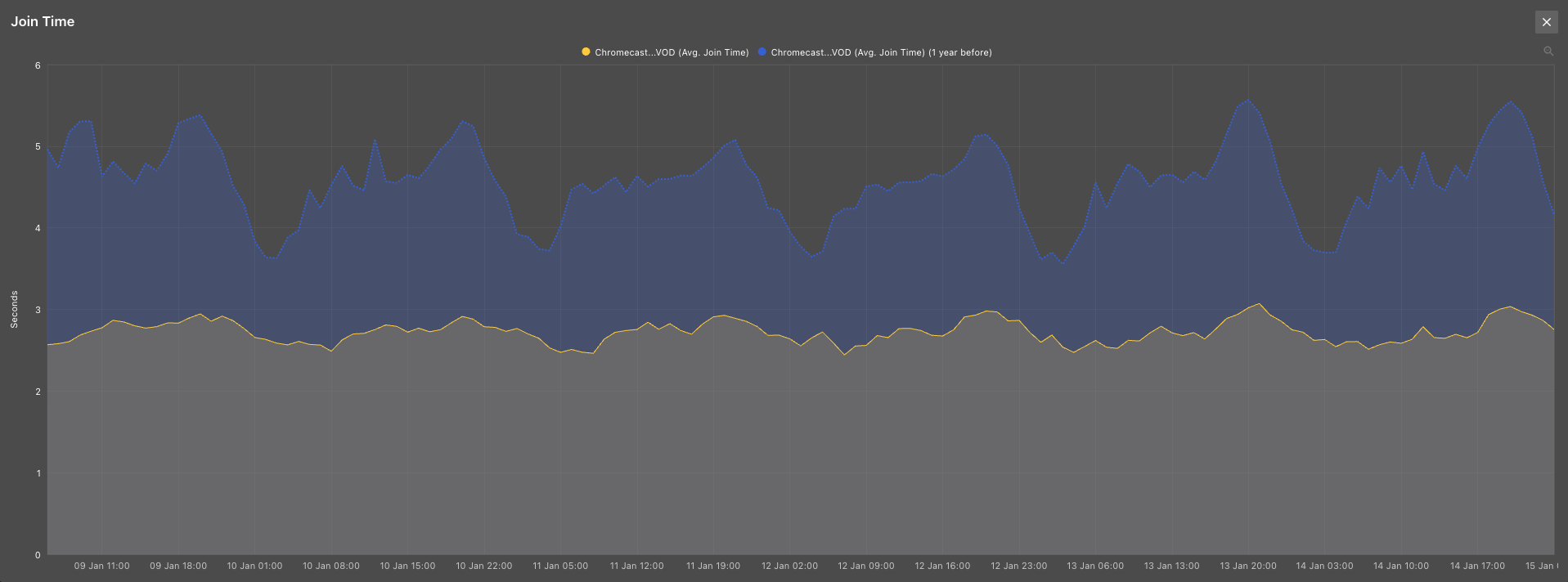
Video Join Time: Reduced from ~5.8s to ~2.8s 🚀 (A massive 52% improvement!)
-
IDLE / Pairing Page Load: Dropped from ~7s down to ~4s ⚡
-
Stability: We have witnessed significantly fewer critical performance variations, leading to a much more consistent user experience.
Note: We are still in the process of migrating our entire user base, but the data from the new implementation is already showing all the benefits.
💡 Lessons Learned
Decoupling a core feature from a monolith is a major undertaking, but this project highlighted several key principles for success:
-
Validate via POC: Building a Proof of Concept was crucial. It provided the data needed to prove that a standalone architecture would solve our performance issues before we committed to a full rewrite.
-
Platform-Specific Needs: Low-power devices like the Chromecast don’t just benefit from lean code—they require it. Tailoring the environment specifically for the hardware is often more effective than trying to optimize a shared codebase.
-
Autonomy Drives Velocity: Removing the dependency on the main web project’s build and deployment cycles did more than just speed up our workflow; it removed the “developer dread” by giving the team full ownership of their release process. This is valid for our chromecast team as well as our web team. Indeed their validation, homologation and release process don’t need to include the Chromecast.
-
Data-Driven Buy-In: Highlighting clear KPIs, like the 50% reduction in video join time, made it easy to demonstrate the ROI to stakeholders and justify the time spent on refactoring.
By focusing on these areas, we successfully transitioned from a technical bottleneck to a modern, high-performance application that our team is proud to maintain.